Showing posts with label Seed starting. Show all posts

Friday, August 30, 2013

Prepping and Planting the Fall Garden.


A few days ago, some of my friends and I were chatting about gardens. (Shocking, I know.) Specifically, I mentioned that I need to clean up the summer garden and prepare it for fall crops.
It's a painful process for me.

I hate tearing out any plant that's still producing, even if emotionally I'm so, so ready to get rid of the uglies and plant perky, happy seedlings. As vile as the vines look, I'm not ready to give up fresh tomatoes. I've pulled a lot of vines, but there are still a few that I'm pampering, hoping to enjoy bruschetta through the fall.
 

So, instead of ripping out all of the summer plants in August, I prepare for the fall garden by starting seedlings in the greenhouse. Yes, it's probably less time consuming to direct sow lettuce, but by planting seeds in biodegradable pots, I'm extending the summer garden as long as possible while getting a head start on growing produce.

If you're starting seedlings for your garden, you might want to refer to this chart that I put together last fall. It's my cheat sheet that shows when you should plant seeds for your fall garden, depending on your first expected frost date (which you can find here.) It also gives you hints about depth for planting, how long until germination, and when you can expect to harvest your crops. Some seeds, like radishes and carrots, really do need to be direct sowed, though. Still, that's OK—radishes grow quickly and are typically ready to harvest in 28 days. Carrots can remain in the garden throughout most of the winter (mulched with straw in cold climates), harvesting as you need them. In fact, the cooler soil can make the carrots taste sweeter.

Before any plants enter the fall garden, all of the summer debris needs to be cleared—particularly any diseased plant material. A fresh layer of compost will be added to the beds and mixed in well, and I'll do a soil test to check pH and determine any nutrients that are missing for the fall crops.


But the best part of planning the fall garden? Why, selecting what you're going to grow, of course! My friends asked what I planned to grow this fall, but at the time I hadn't selected the varieties. Now, though, the seeds have arrived and are anxiously awaiting their new home! Everything I've ordered is heirloom and organic, and some of the varieties are just ridiculously beautiful. Here's what's going in the fall garden:


Heirloom lettuce
Forellenschluss (My favorite—I love its beautiful speckling, plus it's crispy and delicious.)
Grandpa Admire's (Another favorite that's on Slow Food USA's Ark of Taste.)
Merveille des Quatre Saisons (I just love saying the name in my high school French accent.)
Big Boston
Flame
May Queen
Petite Rouge
Red Romaine
Rouge d'Hiver
Rubin
Chadwick's Rodan

Spinach
Merlo Nero
Bloomsdale Long Standing
Red Malabar (which isn't spinach, really...but it's a beautiful vining green with red stems, so I'm excited to add it to the garden.)

Chinese Greens
Ching Chang Bok Choy
Chinese Pak Choy
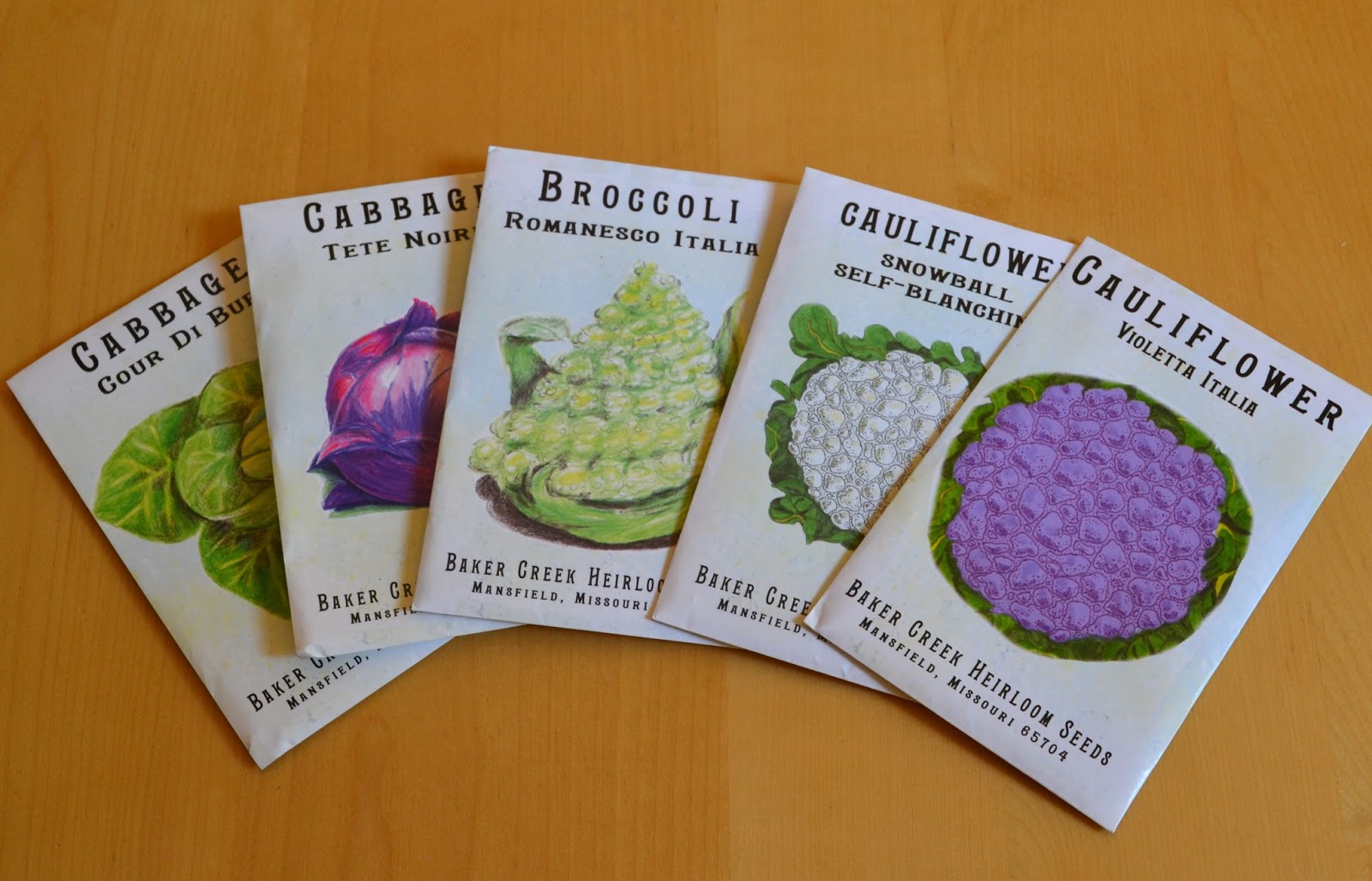

Broccoli
Romanesco Italia

Cauliflower
Violetta Italia
Snowball Self-Blanching

Cabbage
Cour di Bue
Tete Noire

Swiss Chard
Five Color Silverbeet

Kale
Lacinato
Red Russian
Chinese White Flowered


Peas
Blue Podded Blauwschokkers
Golden Sweet Snow
Sugar Ann Snap

Radishes
Early Scarlet Globe
French Breakfast
Purple Plum
Pink Beauty

Beets (I'm embarrassed to say—I've never grown beets. Can't wait to try these!)
Chioggia
Gourmet Blend

Leeks
Bleu de Solaise
Scotland

Carrots
Parisienne
St. Valery
Amarillo
Cosmic Purple

I'll also grow some Brussels sprouts for Peter, but I'll most likely buy transplants for those. For whatever reason, I have a tough time getting them started from seed, and I have a source locally where I can get organic Brussels sprouts plants.

Oddly absent from our southern garden—collards. I know, I know—how can I be a southern gardener without collards? For whatever reason, we just don't eat collards. Maybe it's my Yankee upbringing coming out. Can anyone give me a good endorsement for collards and why I should try them?

I haven't ordered my garlic and shallots yet—and I need to do that soon. Many varieties of garlic sell out early, so that's definitely on my to-do list. Usually, I dedicate one raised bed to garlic and plant about five varieties. We use a lot of garlic!

Besides planting the beds in the large kitchen garden, I'm starting seedlings for the potager, as well as for some containers. I'm also planning to incorporate some fall edibles into the front gardens. Personally, I've never liked ornamental cabbages, but I find edible combinations, like kale and violas, or the rainbow colors of Swiss chard alone, really beautiful. We'll see how it turns out! I'll keep you posted.

I also need to check my mini hoops from last year to make certain the plastic isn't torn. In our zone 7b garden, these little low tunnels (which cost a whopping $10 for materials) provide enough protection from the cold to keep most of our crops producing throughout the winter. I also cover the potager with plastic when we have a freeze warning, but I already know I need to replace that plastic cover. The fencing gouged big holes in the plastic due to the weight of rain on the cover. (Note to self: remove the plastic before a rain!)
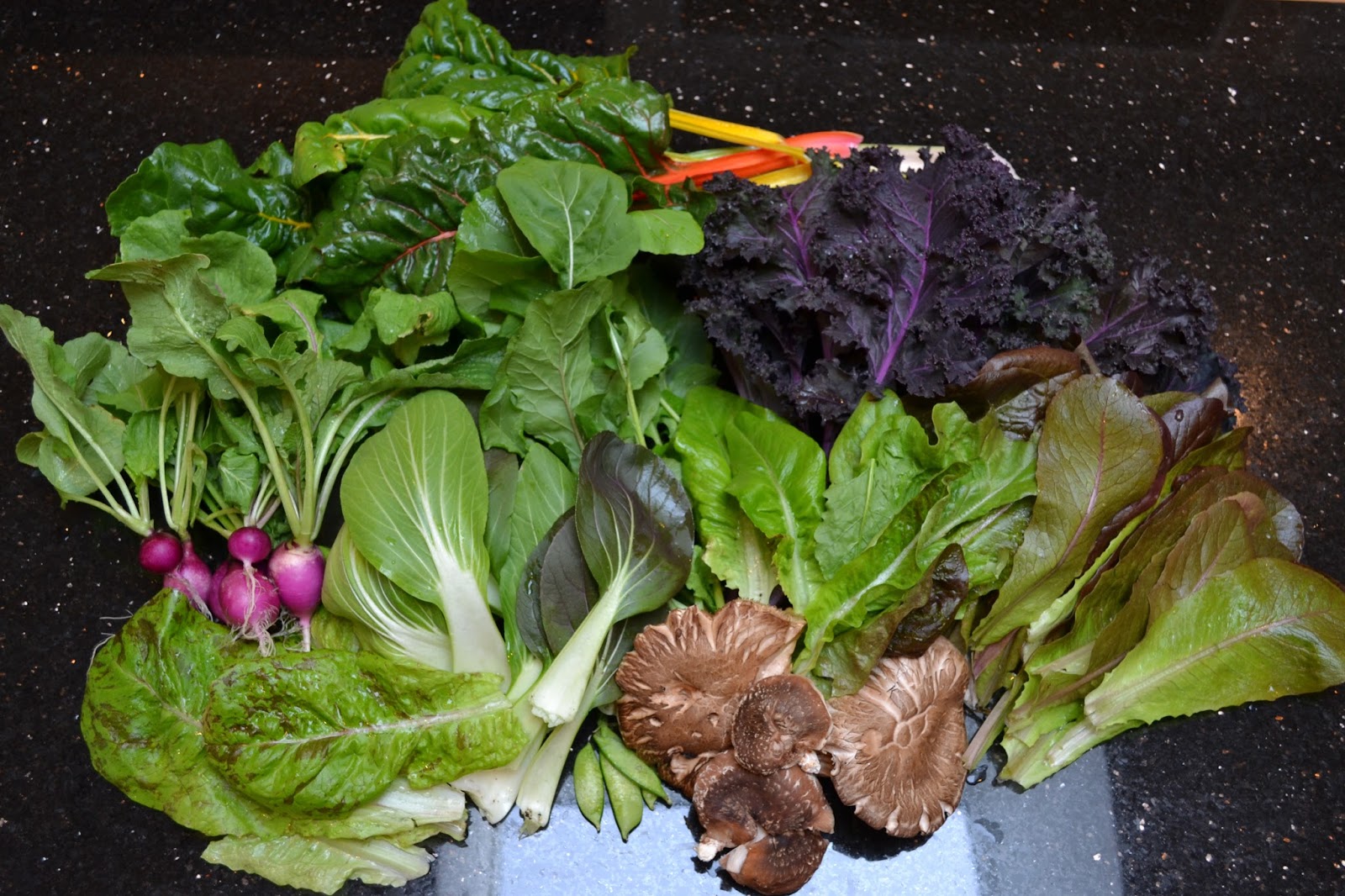

With a little preplanning and preparation, we'll be enjoying lovely harvests from the garden all winter. 

Have you planned your fall garden? What are you most looking forward to growing in the cool weather?

Hope you enjoy a wonderful holiday weekend!

XOXO ~

Julie

Monday, August 20, 2012

School Days, Cool Days...It's Time for Fall Crops.


It's quiet. Eerily quiet. No Wii battles. No Harry Potter marathon. No endless rationalizing about why we need a horse.

Except for the dogs' whining, the only sound is the chirping of birds. With the balcony door wide open, the cool 64 degree breeze is airing out the house from the smell of bacon and pancakes.

How can today be the first day of school?

Seriously, I'd like to time travel back to the end of May and enjoy another summer vacation with the kids. Instead, we're back to reality. Schedules, enforced bedtimes, and homework just aren't as much fun as Scrabble tournaments, beach trips, and after dark swim-fests.

In a blink of an eye, summer vanished. In a blink of an eye, my babies are now a college senior, a sixth grader, and a second grader.

Impossible. (Notice the lack of back-to-school photo for the college boy? He didn't even want help moving back to school. Sniff.)

While I wallow in mom-angst, I must get busy. Although summer doesn't end until September 22, it's time to prep for fall gardening.

Honestly, I'm ready to rip out the summer garden. By late July, the garden looked ratty. Fortunately, it still produced well, which is the point of a vegetable garden, isn't it? Still, I dreaded when a friend or acquaintance wanted to visit the garden. By August, the plants looked so horrific that I found it difficult to visit the garden. The wilting tomato vines and spotty, overgrown cucumber plants depressed me. So now, here we are, August 20, and I have no qualms about ripping out the ugliness to replace it with lovely, fresh cool weather crops.

The problem is—I need to grow my fall garden transplants.

Yesterday, I spent three hours scrubbing seed trays. Naturally, the seed trays should be washed, bleached, rinsed again, and put away after spring planting. In an ideal world, I would open the greenhouse and find immaculate seed trays awaiting seed starting mix and seeds.

But this is my world.

Instead, my back aches from Saturday's marathon tray scrubbing session while the kids played in the pool.

Next time, child labor may be involved.

Now that the trays are clean and disinfected, it's time to check the planting schedule.

The most important consideration when planning your fall garden is: when is the first frost expected for your area? If you don't know the approximate frost date, you can contact your local extension service or enter your zip code here.

In our area, we expect frost by mid October—approximately October 15.

For a few of the veggies I plan to add to the garden, like Brussels sprouts for Peter, I'm a little behind schedule. But Brussels sprouts actually taste better after exposure to frost, so I might be OK. I hope.

Because I'm starting the fall garden from seeds, it's important to consider how long each variety takes for germination, as well as days to harvest. Although cool season crops can survive some frosts—and even freezing temperatures with protection—the plants need to be established and mature before the first hard freeze. 

Today, because I'm in the thick of seed starting, I thought I'd share the following information for your use when planning your fall garden. The following table will give you an idea of how long it will take for your cool weather veggie seeds to germinate, what temperature and depth is best for germination, and how long until your crop is ready for harvest.

Armed with your average first frost date, you can then calculate when to start your fall garden seeds.

Crop
Soil Temperature for Germination
Min./Best/Max.
Seed 
Planting Depth
Days to Germinate
Days to Harvest
Arugula
40-70-80
1/4”
5-7
40-45
Beets
40-80-90
1/2”
7-10
50-60
Broccoli
40-80-90
1/2”
3-10
65
Brussels Sprout
40-75-80
1/4”
5-10
90-100
Cabbage
40-80-90
1/2”
3-10
60-80
Carrots
40-80-90
1/8”-3/8”
10-17
60-70
Cauliflower
40-80-90
1/2”
3-10
60-70
Collards
40-75-90
1/2”-3/4”
5-10
60-70
Kale
40-75-80
1/4”
3-10
60-70
Kohlrabi
40-80-90
1/4”
3-10
50
Leek
40-80-90
1/4”
7-12
120
Lettuce, Head
35-70-70
1/4”
4-10
55-70
Lettuce, Leaf
35-70-70
1/4”
4-10
45-70
Mustard
40-70-80
1/2”
5-10
40-60
Onions, Bunching
35-80-90
1/2”
7-12
60
Onions, Globe
35-80-90
1/2”-3/4”
7-12
110
Pac Choy
40-75-80
1/4”
4-7
45-50
Parsnip
35-70-90
1/3”
15-25
70
Peas
40-70-80
1/2”- 1”
6-15
65
Radish
40-80-90
1/2”
3-10
30
Rutabaga
40-75-80
1/2”
7-10
100-110
Spinach
40-70-70
1/2”
6-14
40
Swiss Chard
40-85-95
1/2”
7-10
60
Turnip
40-80-100
1/4”-1/2”
3-10
50

(FYI: A few of my favorite sources for organic, heirloom seeds are Seed Savers Exchange, Baker Creek Heirloom Seeds, Sow True Seeds, and Southern Exposure Seed Exchange.)

For example, my first frost is projected for October 15. If I want a good harvest of leaf lettuce, I'll need to plant by September 1.

Yikes. I need to clean out the gardens!

So, now you know when to start your seeds, what the temperature requirements are for germination, how deep to plant the seeds, how long it will take until your babies make an appearance, and when you can start feasting! But—should you start your seeds in containers, or direct seed into the garden?

Some plants don't like their roots disturbed. Beets, carrots, chard, peas, and spinach should be direct seeded in the garden or started in biodegradable pots. Some plants, like Brussels sprouts, require a long time until maturity and benefit from an early start in containers or trays. Also, by starting seeds in containers, you can continue to enjoy your productive summer garden without needing to make space for fall crops too early.

(Of course, if your garden looks like ours, you might be ready to clear it out and direct seed everything.)

You can find a quick refresher on what supplies you need and how to start growing your seeds indoors here.

Over the next few weeks, I'll highlight some fall crops—what to watch for regarding pests and diseases, how to tend, how to harvest...and especially, how to enjoy the bounty.

What are you planning to grow in your fall garden? Any favorites, or are you trying some new varieties? And—as always, if you have any questions about starting your seeds, please let me know!

Happy sowing!

XO ~

Julie

Tuesday, February 28, 2012

Ready, Set...Grow!


I've been remiss. Lately, I've blathered on about winter blooms, eating more veggies, and assorted garden/life meanderings. It's time to get serious.

The countdown is on.

It's a mere 20 days until spring.

Yippee!

(And--eek!)

Hopefully, you've rested up over the winter, snuggled with your seed catalogs, and designed your dream garden.

Now, it's time to get to work.


For the next few weeks, we're going to be each other's support systems, OK? I'm up to my eyeballs in seedlings and plan to live in the greenhouse until all of the babies are potted up. (Wish we had installed a fridge and a potty in there, darn it...and I hope the kids remember who I am when I finally rejoin family life.)


Still, I'll try to share a few pre-spring gardening tips to help you get ready for the BIG DAY. If you'd do me a favor and stop by, say hi and check to see that I haven't been buried alive by the 160 varieties of tomato plants, I'd be really grateful. Right now, my sole greenhouse companions are old episodes of “30 Rock” on Netflix...on my phone.

I love Tina Fey.

Anyway, before we get busy, we need to determine exactly when your BIG DAY is.

And by BIG DAY, you might think I mean the First Day of Spring, which is, emotionally, such a relief after winter.

Actually, the BIG DAY that impacts everything you do in the garden is....

The LAST EXPECTED FROST DATE.

That just doesn't sound as sexy as “First Day of Spring,” does it?

So, let's acronym it: LEFD.

Hmmm. That's even less sexy, I think.

Still, LEFD is the most important date on your growing calendar. By determining when your area's last frost is projected, you can plan when to start seeds indoors, how soon you can sow seeds directly into your garden, as well determine when to set out hardy versus tender transplants. After all, we want to get a jump on spring without murdering our green babies with a bout of sub-freezing temperatures, right?

Recently, there's been much publicity about the USDA's new hardiness zone map. The map serves as a guide to help determine which plants are most likely to thrive in your location. 


The updated map redefined zones based on climate changes and temperature increases. My zone, 7b, remains the same—but just 30 minutes away, a friend's zone changed from 7b to 8a. You can enter your zip code here to find your zone. (Personally, I found the slight variations in colors a little challenging when looking for my zone.)

The map is a terrific resource when deciding which perennials are best for your area, but it doesn't provide the all important LEFD, which you need to know when planting a vegetable garden. Instead, the classic Old Farmer's Almanac goes high tech with this fantastic interactive chart. Simply enter your zip code and up pops a schedule outlining when you should plant specific vegetables according to your area's last expected frost.

For instance, the results for my zip code search indicate that there's a 50% chance of frost after April 4. Personally, I like to hedge my bets, so I never plant our warm weather crops until April 15. (Also, to be honest—I don't have time to plant our garden until the end of April, because I'm too busy getting plants ready for customers. Yet another example of the “Shoemaker's Children”...sigh.)

Once you determine your LEFD, you can pull out the plans for your amazing kitchen garden.Take a look at the list of plants you want to include, get your seeds packets (or hurry up and order!), and then start counting backwards from your LEFD. Some seeds are best started indoors. Some hardy plants can be directly sown into the garden prior to the last frost. And some need to be planted after the soil warms a few weeks following the LEFD. 


For your planting pleasure, here's a cheat sheet:

Seeds to Start Indoors Prior to LEFD (transplant after last frost)
Chives, Globe Artichoke, Leeks, Onions--12 weeks prior to last frost date
Celery, Lemongrass--10 weeks
Eggplant, Peppers, Tomatillo, Tomatoes--8 weeks
Asparagus, Broccoli, Cabbage, Cauliflower, Basil, Fennel--6 weeks
Cucumbers, Melons, Okra, Pumpkins, Squash--3 weeks

Direct Seed in Garden BEFORE Last Frost (hardy plants)
Onion Sets, Seed Potatoes--6 weeks prior to last frost date
Kale, Kohlrabi, Spinach, Turnips, Mustard--5 weeks
Beets, Carrots, Chinese Cabbage, Endive, English Peas, Radish--4 weeks
Lettuce, Swiss Chard--2 weeks

Direct Seed in Garden AFTER Last Frost (tender plants)
Beans, Celeriac, Cowpeas--1-2 weeks after last frost date
Corn, Muskmelon, Watermelon, Okra--2 weeks
Pumpkins, Squash--2 weeks
Cucumbers, Peanuts, Amaranth--2 weeks

You probably noticed a few items, like cucumbers and okra, are listed twice--to start indoors or to direct sow after danger of frost has passed. By starting seeds indoors, you're getting a jump on the growing of some fruits and veggies that require a long growing season until harvest. (We'll chat about harvest schedules next time...)

So, are you ready? Do you have your seed starting mix and some trays? Have you divided your seed varieties into similar starting times? Do you have a good light source?

Are you ready to unleash the stars of your ideal kitchen garden?

Then—let's GO! It's time to start some seeds!

Have fun! Plant what you love! And—I highly recommend “30 Rock” reruns to keep you company. Laughter helps plants flourish...I'm sure I read that...somewhere.

Happy Almost-Spring Gardening!

XO ~

Julie