Wednesday, February 15, 2012

A Blooming Escape from the Winter Blues


It's been a strange morning. I'm not sure if it's the lack of good sleep or a severe sugar crash after yesterday's festivities, but boy—I need some motivation. Do you ever have those days when you have so much to do that you just can't start? That's me today. An overwhelming amount of projects coupled with a hint of melancholy—I feel a little like I have postpartum depression this morning. Is that possible, six years—eek, almost seven years!--after the last munchkin arrived?

Hmm. Perplexing.

So, in honor of Garden Bloggers' Bloom Day, hosted by the lovely May Dreams Gardens, I decided to combat my lethargy as I did in my long ago post-baby days.


When our girlie arrived almost 11 years ago, Hatcher Garden was my escape. Since our darling daughter tended to nap only when lulled to sleep in a car, I'd bundle her up, drive to the garden, and carefully transfer the car seat onto the stroller. We'd stroll a bit until we came to this area:


Then, while she napped, I'd read and enjoy the change of scenery.

Hatcher Garden truly saved my sanity on many days.


Founded by Harold and Josephine Hatcher, the garden is a three-acre gem tucked into the westside of Spartanburg, SC. The Hatchers moved to South Carolina in 1969, purchased a small home, and then expanded their property by buying three acres behind their lot--for $2,000. The land, a former cotton field, required extensive work to turn it into a usable garden space. The Hatchers amended the soil, built paths and ponds, and planted more than 10,000 trees, shrubs, and flowers.

(They certainly didn't laze away their retirement!)

In the 1970s, community volunteers joined forces with the Hatchers to expand their vision for the garden. They designed trails, a series of ponds, and added more trees. A gazebo became a focal point upon entering the garden, new flower beds were added, and a wildflower garden became Josephine's pet project.


In 1987, the Hatchers donated the property to the Spartanburg County Foundation. The Hatcher Garden and Woodland Preserve became the official name of the garden, honoring the couple whose vision provided a retreat for school children, workers on lunch breaks—and new moms with their babies.


When Josephine died in 1999, Harold restored the wildflower garden in her memory.

When Harold died in 2003 at the age of 96, he gave his life's savings to endow the future of the garden.

While there are many private gardens that become community sanctuaries, the beauty of the Hatchers' garden lies its humble beginnings. The Hatchers weren't wealthy landowners—they simply loved to garden. And they worked diligently to share their love with the community.

The last time I went to the garden was in October. Once or twice a year, my amazingly talented friend, Jessie, takes photos of the kiddos. (You can see her work here.)
Let me tell you: our kids give Jessie a work out. Still, she manages photos that make our children look sweet and civilized...


...but I actually love these honest photos even more, because they capture our kids' crazy personalities so well! 


Anyway...

When I strolled through the garden today, thinking that Hatcher Garden would be a perfect location to find blooms, I was amazed at the changes:

The Garden of Hope and Healing...
 
 
...plus dozens of newly paved paths, water features, and memorials.

When Peter and I first visited Hatcher Garden years ago, we took our oldest son (who is now 21) to scout for turtles. He was in a serious turtle obsession at the time. Once, when we were poking around in the ponds and not having any luck, we met an elderly gentleman who guided us to a different pond to help ensure our turtle hunting success.

Mr. Hatcher.

The garden has changed. It's more formal, more structured. Master Gardeners flock there to volunteer. School groups are guided through the garden by horticulturalists. And now, signs like this are a feature at the ponds:


I wonder if Mr. Hatcher would approve?

Still, the camellias were lovely.


After my visit, I felt better. Maybe it was the change of scenery, maybe it was a dose of vitamin D. Maybe it was the realization that spring is only 33 days away.

Also, I realized that while I bemoan winter, I'm pretty lucky here in Upstate SC. After a quick walk through our yard, I found plenty of blooms to share for Bloom Day.

Crocus...


Hyacinth...


Ice Follies Daffodils galore...

Muscari...

Hellebores in every shady corner...and we have a lot of shady corners!


Tulips, popping their heads out of the soil...


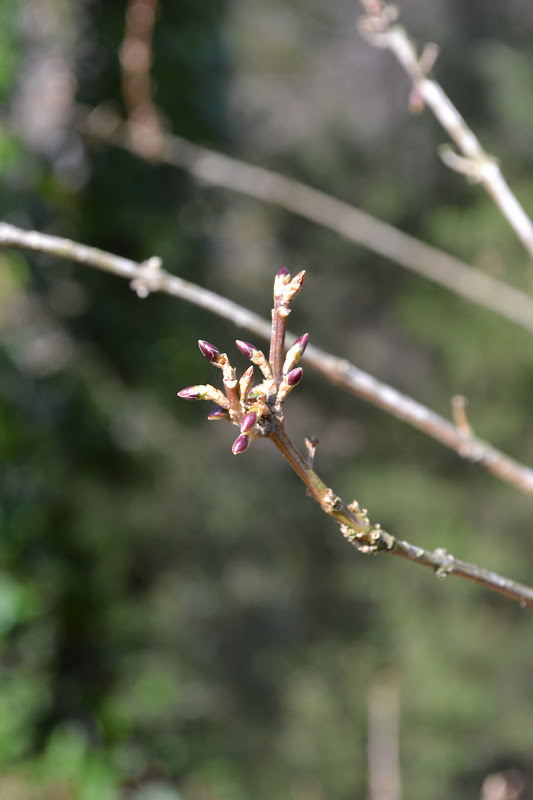
Forsythia buds...
 

Daphne. OK, technically, it's not mine. I'm claiming this daphne, even though it's not in our yard. The fragrance reaches our front door from the neighbors' yard...delicious.


Daylilies, popping up a little early....

Iris, "Harmony," I believe...
  
Blueberry buds...

And look! Fraise des Bois are producing flowers already! Bliss!


Of course, my days are mostly spent in the greenhouse, prepping my babies for the selling season ahead. Sweet Peas, ready to pot up...
 

160 varieties of heirloom tomatoes...future bruschetta factories!


Basil...is it summer yet? Why yes, when I run my hands over these babies, it smells like June.

Nasturtiums in every color...

And heirloom hollyhocks, also ready for bigger homes.

And finally, the kitchen garden is still hanging in there, even after some 20 degree nights.
Pac Choi...(and weeds.) 

Rainbow Chard...

Broccoli...grow, baby, grow!

Huh. I didn't need to leave our yard to participate in bloom day after all.

But I'm glad I did.

My funk faded, and I've gotten a few things accomplished.

Finally, I loved this stone that I found at the entrance to the Garden of Hope and Healing. The words, in memory of a loved one, somehow spoke to me today.

Happy Bloom Day, everyone!

XO ~

Julie

P.S. If you'd like to know more about Harold Hatcher, this is a lovely book:


Monday, February 13, 2012

Tiny Miracles


It was a stressful weekend in the greenhouse.

I know. Sounds likes an oxymoron, right?

Trust me. Whoever thinks that greenhouses are a blissful respite of peace and tranquility never owned a greenhouse for business purposes. Those calm, soul-rejuvenating glass structures are known as “conservatories,” and I'm pretty certain the owners of conservatories employ horticulturalists to ensure their plants don't freeze.

I, on the other hand, tangled myself in wires and extension cords, power outlets and gas tanks, in the hopes that my green babies would survive the 20 degree temperatures this weekend.

Who knew that I'd need an electrical engineering degree to own an heirloom plant nursery?

Fortunately, as the temperatures plummeted, my fabulous technical support—a.k.a. Peter—intervened.

It kills me that there are certain things, like wiring greenhouses and lugging 120lb tanks of propane, that I can't manage on my own. Honestly, I just want to grow plants and help other people learn to grow their own food. Why does all of this technical junk need to interfere?

After all, the business of growing plants hardly feels like a business. It's more like an amazing feat of magic. To take a tiny seed...


...turn it into an adorable green baby...


...nurture it into a six-foot giant...


...to produce stunning, delicious fruit...


...that becomes dinner...


...now, THAT is magic. I know some curmudgeon will argue that it's, oh, something as banal as biology.

And scientifically, I obviously understand that a seed becomes a fruit-producing plant.

But when that first, tiny sprout unfurls in the toasty greenhouse while Arctic winds blast outside...


...magic.

I held my breath throughout the weekend, watching the thermometer, hoping the heater could keep up with the dropping temperatures. After all, nestled in the greenhouse are—literally--thousands of seedlings. My inventory for the season. My babies. 


So far, our system is working. A back-up electrical heater is giving an extra boost of heat to help the propane, and we're relaxing a bit, especially since Peter just had the big tank refilled today. We're expecting some more chilly nights, and maybe even a touch of a “winter event”--which, in South Carolina, is a major happening.

Still, the green babies are toasty, getting their first real leaves and teasing me with the aroma of basil and tomatoes.

Only 35 days until spring...

Stay warm!

XO ~ Julie

Thursday, February 2, 2012

Spring, Interrupted.


Dear Punxsutawney Phil:

It's time to re-evaluate your career path. It's 70 degrees here in sunny South Carolina.

Crocuses are bursting.


Daffodils are popping.

 
The itty bitty basil is getting its first set of leaves.


Seriously, fur-ball, don't threaten me with six more weeks of winter. You might want to laze around for another month and a half, but for some of us, it's time for winter to be done.

D.O.N.E.

I highly recommend that you retract your original findings, forget about the shadow you thought you saw this morning, and issue a new statement that says:

“Hooray! Spring is HERE! Let's sow some seeds, people!”

I'll be waiting for your apology.

Sincerely,

Julie


Monday, January 23, 2012

Winter Babies, Spring Babies.

It's Monday. It's bleak. Dreary. Cold, wet, and nasty. My girlie is home with a tummy-ache, a headache, and various other undefined aches. My plans for work are scattered and shuffled. Downstairs, boxes and boxes of seeds await planting. The Garden Delights website needs updating. The house needs scouring. To top it off, there are no. snacks. in. this. house.

Honestly, a chocolate chip cookie would cure my lethargy. I'm certain of it.

Instead of a sugar boost, I sloshed down to the big greenhouse to check on the few trays of seeds I planted Friday.

 
Unlike my friend Jessie, who has been anxiously awaiting the arrival of Baby “J” now for 41 weeks (and she looks magnificent, by the way, which is really irritating because I was never a cute pregnant woman, let alone adorable at 41 weeks of baby-ness)...


...my babies are already making an appearance!


That tiny bit of green gives me hope that perhaps spring will arrive...someday.


As an added perk, the first daffodil of the season popped...bliss! If I lean way back in my chair and turn my head a bit to the left, I can waste some more time gazing at its cheerfulness.

Alas, it's time to get busy. My husband has accused me of treating my business like a hobby, and as much as it kills me—today, I agree. So, it's time to update the site and add all of the new offerings, give some crackers to my girl, and finish planting the herbs and heirloom flower seeds.

Because tomorrow, it's time for tomatoes...lots and lots of tomatoes.

I hope your Monday is far more productive than mine.

XO ~

Julie

P.S. Heaven! I found a lone, unclaimed Lindt chocolate truffle. Ahhhh....

Tuesday, January 17, 2012

Trapped in an Ethical Quandary. (Or, the Things We Do for Salt.)


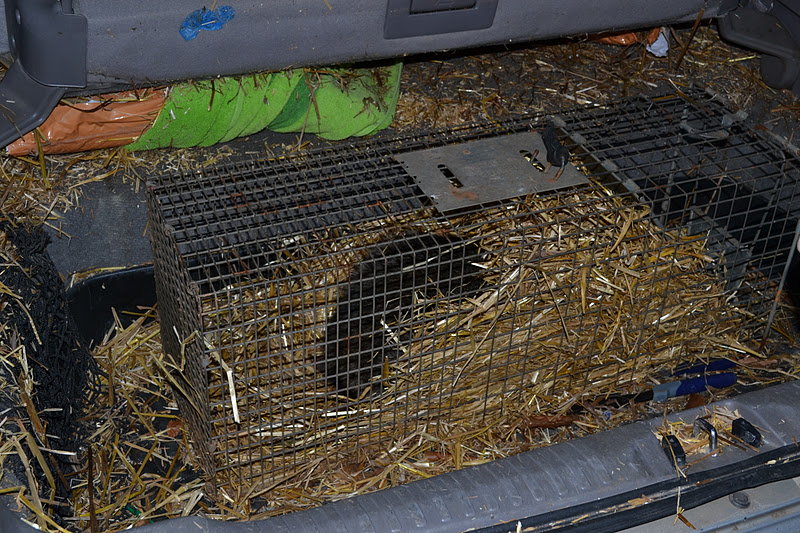
We caught a killer.

And it was adorable.


First, before I continue our saga...

THANK YOU.

(I shared your kind comments about our loss of Salt with our chicken-mama, Kiki. Your sympathy really touched us—and she's feeling much better.)

After the raccoon attack, we moved the girls inside at night, housing them in a dog kennel in our basement to keep them safe, while we frantically worked to finish the new coop. Still, we worried that the raccoon would return during the day while they free-ranged in our backyard. Yes, raccoons are nocturnal—but who knew if it would come for a late lunch or an early dinner, now that it found a self-serve buffet?

So we borrowed a trap, baited it with scallops, and waited.

Five days after the attack—and after accidentally catching Roxanne in the trap, which scared an egg out of the poor thing--success!

There are a few things you should know about us:

We love animals. We believe kids need to play in nature. We support wildlife organizations. I'm a card carrying member of Greenpeace, The Nature Conservancy, the World Wildlife Foundation. We've raised abandoned baby squirrels and released them into our forest.

And we have a Backyard Wildlife Habitat certification.

Now, we had a raccoon...in a trap.

(“Mommy, if you let me keep him, I'll clean his cage!” promised our youngest, Mikey. Hideous chicken-slaughtering beast turned darling potential pet. Even Chicken-Mama cooed over it.)

The irony of the situation isn't lost on me. In fact, while my husband took the kids to school, the guilt set in.

The killer now cowered in the corner of the trap, hiding behind the straw it had pulled into the cage to—what? Stay warm? Hide?

Our plan was simple. Catch the murderer and release it in the mountains where it could live a good, happy raccoon life—far away from our pet chickens. Peter and I knew a beautiful, forested, undeveloped area with a river, not far from where we hike.

Seems reasonable, right?

While waiting for Peter to return, I worried about the stress level of the raccoon in the trap. I went to the computer and Googled “How to Minimize Stress when Relocating Raccoons.”

And found that, in all likelihood, we'd just handed it a death sentence.

No matter how carefully or where we relocate it, said the website, the raccoon's chance for survival is not good. Raccoons are territorial, and the existing raccoons in the area may attack the newcomer.

Our easy solution wasn't so simple, after all.

In fact, relocating a wild animal is illegal in some states. (I decided not to research the legality in SC further.)

If we release the raccoon back into the forest, our daughter's chickens are in jeopardy.

If we relocate it, we're removing it from its territory and potentially killing it.

Guilt set in.

And I kept it to myself.

Peter returned, loaded the trap into the van, and off we drove to the mountains, according to our plan.


(If you're cheering for the raccoon at this point, you'll be happy to know...it paid me back by leaving a lovely, odoriferous memento in my van. Whew.)

We reached our destination and unloaded the trap. 


After a bit of coaxing and a look to Peter that said either “How could you do this to me?” or “I'm going to bite your nose off...”

...whoosh! Freedom!

But was it, really?

We watched the raccoon for a bit as it swam through the river, ran along the banks, darted across the road, then ran back to the water.

And hoped we had caught and released the true bandit.

Being a naturalist or conservationist is not always such an easy decision. No matter what good intentions we might have, our actions impact the environment. We tried to resolve a predator versus pet conflict humanely.

But was our decision truly humane?

Honestly, it feels hypocritical.

Still, I'm hopeful that removing the raccoon might keep our daughter's pet chickens safe. She is less worried—but more vigilant—about them. After all, I'm sure it's not the only raccoon in our neighborhood.

Soon, though, the chicken fortress will be complete, and the girls can sleep safely in their raccoon-proof home.

I think I might need to remove our Backyard Wildlife Habitat sign.

It might ease my hypocrisy.

XO ~

Julie

Wednesday, January 11, 2012

Life Lessons.


We lost Salt this weekend.

When we decided to add chickens to our menagerie, I knew the risks. We live in a subdivision, but we also live in a forest. A river borders our property. And we've always loved spying wildlife in our backyard. Deer. Possums. Squirrels.

Raccoons.

Although the girls free-range in a protected area in our backyard, we lock them away in the coop at night to keep them safe.

After all, these are Kiki's babies.

Who knew how sly a raccoon could be—or how vicious. Not only did it open two latches, causing the girls to scatter into the dark at 3 a.m.--it refused to give up Salt, hissing at me and standing its ground while I yelled at it and tried to make it run. It finally, finally left the area when I shook a tarp at it—but it didn't go far. I stood watch while Peter searched for the girls.

Thankfully, they hadn't flown to the forest, and within an hour—we had them all safely tucked away. They were nervous but unharmed.

Except poor Salt.

We were hopeful, though.

At 5:30 a.m., our wonderful vet met my girlie and me at the clinic while Peter stood guard in case the raccoon returned.

Dr. Hurlbert examined Salt, explained the extent of her injuries, and discussed what she might do, all while being as gentle as possible to my devastated girl. She explained that the damage to Salt's beak and her back wounds would require surgery, and even then—there was no guarantee. Best case scenario—we would need to tube feed her until her beak healed. She also worried that the bacteria from the raccoon could make Salt septic.

We asked her to try her best, and left Salt in her care.

I know what you're thinking.

It's a chicken, for goodness sake! Who spends $400 on surgery for a chicken?

We do.

Sadly, Salt couldn't be saved. Her injuries were too extensive, and even if she survived, Dr. Hurlbert told me that she would be in constant pain.

I had to tell Kiki.

My poor, sweet chicken mama.

When I picked up Salt from Dr. Hurlbert's office, they had this for Kiki:

 
I am so thankful for our wonderful vet (who, by the way, did not charge us $400.)

Peter is frantically trying to finish the already-in-progress chicken palace—a fortress-like building that no raccoon can infiltrate.

Until then, guess who is living in our basement after dark, under house arrest?

Yes. I know. It's not a pretty sight. (Or smell.)

Our weekend tragedy makes me question what I'm teaching our children.

Yes, Kristen loves animals, and that's one reason we have so many—but the chickens, while pets, are also supposed to teach a lesson about food sources and eating locally. Obviously, we never intended to eat her chickens—but what values am I instilling in her about local food? She eats her girls' eggs. But now, after I held poor, injured Salt and tried to comfort her, I have to admit...I'm meat-adverse. Logically, I know that's crazy—locally raised, humanely treated animals live good lives until the end.

But emotionally, I'm wrecked.

We've been eating a lot of veggies over the past few days.

More than anything, the raccoon taught me a very valuable lesson:

I could never be a farmer of anything but flowers.

My heart isn't tough enough.

R.I.P. Salt. You were a well-loved chicken. Thank you for your eggs.

XO ~

Julie, who needs grief counseling over a chicken.

Friday, January 6, 2012

A walk on the wild side.


Happy New Year, friends. I'm sorry to be a few days late wishing you happiness and health for 2012. As with all good intentions, sometimes they take a little while to come to fruition—especially with the kids home from school. A three hour Horse-O-Poly marathon takes precedence over planned writing time, especially when you're quite certain that in a few, quick years—the horse lover will balk at spending New Year's Day in PJs with her parents and little brother. We've got to snatch those moments now, while we can, and store the memories away for when her angst-filled teen years arrive.

Plus, I wanted my “new look” ready for the first post of 2012. Hope you like it! (Thank you to my technical support, Tyler!)

So, did you make any resolutions? I admit, I'm attempting a few changes:
  1. Bravery.
  2. Wellness.
  3. Patience. (Which I wish would hurry up and get here, already!)
Bravery might seem like a strange resolution. But I've realized lately that there are so many things I've been wanting to do—kayaking, horseback riding, growing my business, writing—that I need to force myself to get out of my comfort zone. I've been living life a little half-assed lately. It's time to shake things up, because I don't want to live with regrets.

The bravery resolution took a major hit this week, much to my chagrin—and Peter's relief.

There is, of course, a back story:

A year ago, I attended the Carolina Farm Stewardship Association's annual conference, which was amazing. I enrolled in a workshop about growing mushrooms. 


Let me tell you—Tradd Cotter from Mushroom Mountain is brilliant. Part genius scientist, part environmentalist, part fabulous entertainer, part magician...who knew mushrooms could be so fascinating?


Naturally, on the adrenaline high of Tradd's presentation and armed with recently purchased shiitake plugs, I decided it was time to add mushrooms to the list of edibles we grow.

Really, how hard could it be?

Most farmers grow shiitakes on small logs, which are portable and easily submersed in water, which is part of the process to get them to fruit. However, since we had to remove a tree prior to the greenhouse installation last year, I convinced Peter that we needed to use the tree for our shiitakes. He gamely cut up the truck for me, and we moved the logs to my newly designated “shiitake garden.”


When growing mushrooms, there are a variety of methods you can use, as well as an incredible array of mushrooms you can grow. The Mushroom Mountain website rates the difficulty level for growing each variety and tells the various mediums that can be used to grow each variety. (I plan to try the coffee ground method as an experiment with the kids in my next mushroom growing attempt.)

So, we had our hardwood logs in place. I had the shiitake plugs from Mushroom Mountain in hand. (The plugs are approximately inch-long wooden pegs inoculated with shiitake spores.)

Now, it was time to plant some mushrooms.

I'm a little embarrassed to admit this, but even though I consider myself a pretty well-rounded kind of girl...I never used a drill prior to my mushroom endeavor. I know, I know. Pitiful. 

I also learned that you can quickly burn up a drill if you aren't careful.

At no time in my drilling lesson did I learn that the drill could drill in reverse.

Drilling in reverse makes it extremely difficult and tiring to try to make holes in hardwood logs.

Fortunately, a White Knight appeared after smelling burning wood, saved the day, then laughed at me.

But I digress...

Armed with drill knowledge, I drilled lots of holes...in a staggered, diamond shaped pattern. (Make sure to choose the correct bit for the drill according to the size of the plug, and only drill to a depth the length of the plug. I used a small piece of tape to indicated on the bit where to stop drilling.)


The next step was simple—into the holes go the plugs. 


I used a mallet, hammered in the plugs, and got rid of my drilling frustrations.

The final step involved a trip to the kitchen. 
 

Using the double boiler method, I melted canning wax until completely liquid, poured it in a jar, and took it back to the forest. 


With a clean paintbrush, I smeared a thin layer of wax over the plugs to prevent insects from entering the holes. (It was a little chilly that day, so I had to reheat the wax a few times.)

And then we waited.

Part of the process with shiitake logs involves soaking them to stimulate fruiting. However, because our logs weren't easily portable, I set up sprinklers in late summer to provide the needed moisture.

And we waited.

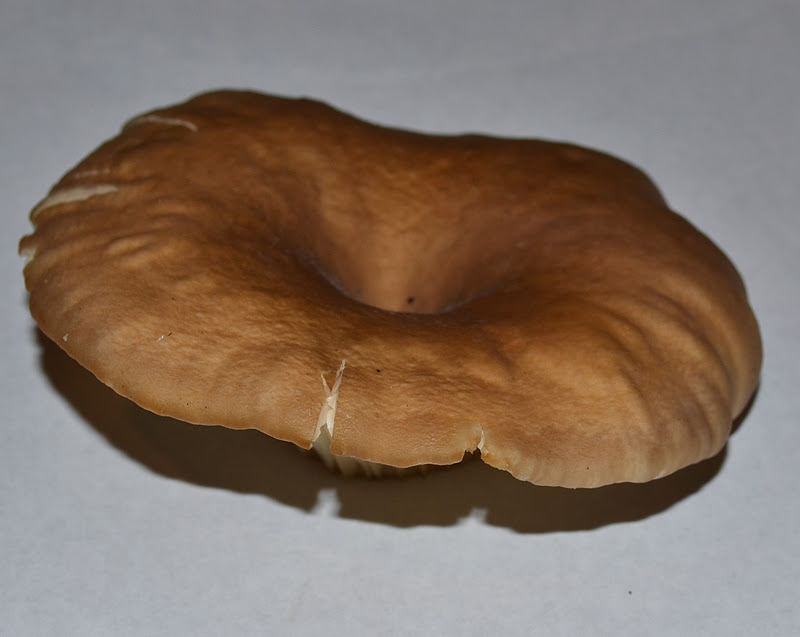
Finally, finally, after giving up hope and deciding I did something wrong in the process, I found these:


Hurray! It worked!

But...wait a minute.

Those look like two different types of mushrooms.

And I don't think they look like shiitakes.

While I was hesitant to eat the mushrooms, Peter was even more cautious. I think he feared that I might be trying to poison him.

So, off to the bookstore I went...


...and came home with a most excellent field guide.

But, as fabulous as the photos and descriptions are, I just couldn't pinpoint exactly which mushrooms we had.

No worries, I thought—I'll do spore prints for each. That should tell us if they're edible.

Making a spore print is easy—if you're patient.

However, if you're like me, you will ruin the print by taking the mushroom off the paper too many times to see if the print is ready.


Put the mushroom on white paper or glass, cover it with a glass (I used a glass bowl, but I've since learned you can cut the mushroom and use a smaller section to make the print)...and leave it alone overnight. Some prints happen quickly, others take a day.

Lesson learned.

When all else fails, turn to the expert. I e-mailed photos to Mushroom Mountain and waited for their reply.

The following morning as I awaited the spore print, I watched “The Today Show” while doing seed inventory.

Interviewed on the show was Nicholas Evans, author of The Horse Whisperer, one of my favorite books...who almost killed himself, his wife, and other family members by cooking poisonous mushrooms. Unintentionally. Fortunately, they all lived after eating deadly webcap mushrooms. Sadly, though, Evans, his wife, and another family member experienced renal failure as a result of eating the mushrooms. Evans has undergone a kidney transplant, donated by his daughter, while the others await transplants.

Was it divine intervention? Kismet? An incredible coincidence?

I threw the mushrooms—failed spore prints and all—in the trash.

I have to admit, my heart was racing. I'm not terribly superstitious, but sometimes—things happen for a reason.

A few hours later, the nice folks at Mushroom Mountain sent a reply to my photos.


“They look like oysters to me,” they said. Which are perfectly safe and delicious.

So, OK. Maybe I'm not as brave as I wish. And yes, we did miss out on eating our own, home-foraged mushrooms.

But I didn't cultivate oysters. I expected shiitakes. Where did the oysters come from?

If I'm patient and wait for shiitakes to fruit, though...will I be brave enough to eat them and serve them to the people I love without a full, fungal analysis?

I just don't know.

I do know that I'll be signing up for another workshop at Mushroom Mountain. Hopefully, I can learn more and boost my confidence—and skill--level.

Although bravery is great, no one dies from mushroom poisoning by being smart and careful.

What would you have done? Would you have gone for it and made a delicious mushroom pasta dish, or would you have tossed those 'shrooms?

Hope your New Year's resolutions are progressing better than mine!
XO ~

Julie