
Many years ago, when I read the book,
On Writing by the master of the macabre, Stephen King, one of
his recommendations stuck:
“...put your desk in the corner, and
every time you sit down there to write, remind yourself why it isn't
in the middle of the room. Life isn't a support-system for art. It's
the other way around.”
Now, granted, King went through some
tough times. During his days of addiction, his grand desk lorded over
a spacious, sun-lit room, where he “...sat behind that desk either
drunk or wrecked out of my mind, like a ship's captain in charge of a
voyage to nowhere.” After he got sober, he traded his desk for one
half its size—and moved it to the corner.
My desk is tucked in the corner. And
although I'm neither a world famous author nor a recovering addict,
the corner desk works. Otherwise, I'd spend most of my time gazing
out the window.
Of course, a window overlooking a
garden actually benefits a garden writer. Because you never know what
might inspire the next story, post, or article:

Yesterday, after several months of
neglect, I finally cleaned and filled the hummingbird feeders. I
hadn't worried much about the birds during the summer, because our
garden is filled with nectar-rich plants that provide sustenance for
the hummingbirds. Still, as the days become a bit shorter and many of
the plants drop their blooms, I decided to add the feeders back to
the garden to give the hummingbirds an additional source of food.

The result? A hummingbird fiesta.
Our garden is typically filled with
hummingbirds. Trees and bushes provide shelter and places to nest,
while the perennials and annuals offer nectar sources. The feeders,
though, provide an extra source of nourishment for the
hummingbirds—plus, they give us strategic viewpoints for the tiny
creatures, which can be challenging to spot among the trees and
lantana.

Clemson
University's Cooperative Extension offers excellent information
on developing hummingbird habitats. Some of the plants recommended
for food sources include lantana, morning glory, honeysuckle,
petunia, snapdragon, butterfly weed, bee balm, Indian paintbrush, and
hollyhock. We've also found that trumpet creeper, hibiscus, and red
columbine attract hummingbirds in our gardens.

In fact, hummingbirds tend to favor red
flowers, although they are also attracted to orange and pink blooms.
However, red food dye added to prepared hummingbird food isn't
necessary.

You don't need to purchase hummingbird
food at the store. It's very simple and inexpensive to make
at home. Because I never remember the exact ratio for making
hummingbird food, I thought I'd share it with you. (Maybe by writing
the formula, I'll finally remember the ratio without looking it up!)

(Do you see its tongue?)
To prepare homemade hummingbird food,
use a 4-1 ratio: 4 cups of water, 1 cup white sugar. Boil the water,
adding the sugar and stirring until it completely dissolves. (Boiling also helps
retard the growth of microorganisms.) Wait until the mixture cools,
and fill clean feeders.
NOTE: Never use honey, brown sugar, or
artificial sweeteners. These ingredients can harm the birds.
Place the feeders at least six feet
apart in the garden. Shade helps slow the fermentation of the nectar.
Clean and refill the feeder at least
once a week, more often in hot weather. Mold in the feeders can make
hummingbirds ill.

You'll find many gorgeous, artsy glass
and metal hummingbird feeders. While I used to purchase the expensive
feeders, I found that either the perch wasn't appropriately sized for
the hummingbird, the feeder was impossible to clean, or it only
lasted one season. Instead, we've been using the
non-artsy-but-practical cheap plastic feeders found at the
non-artsy-but-practical big box stores.

The birds don't seem to mind.

Did you know that a praying mantis can
kill a hummingbird? At first, I thought the praying mantis hung
around to harvest insects near the feeder. But then, it seemed a
little...aggressive. A quick Google search, and I found that
hummingbirds are prey for the praying mantis.
Eek. Thankfully, there were no
casualties.
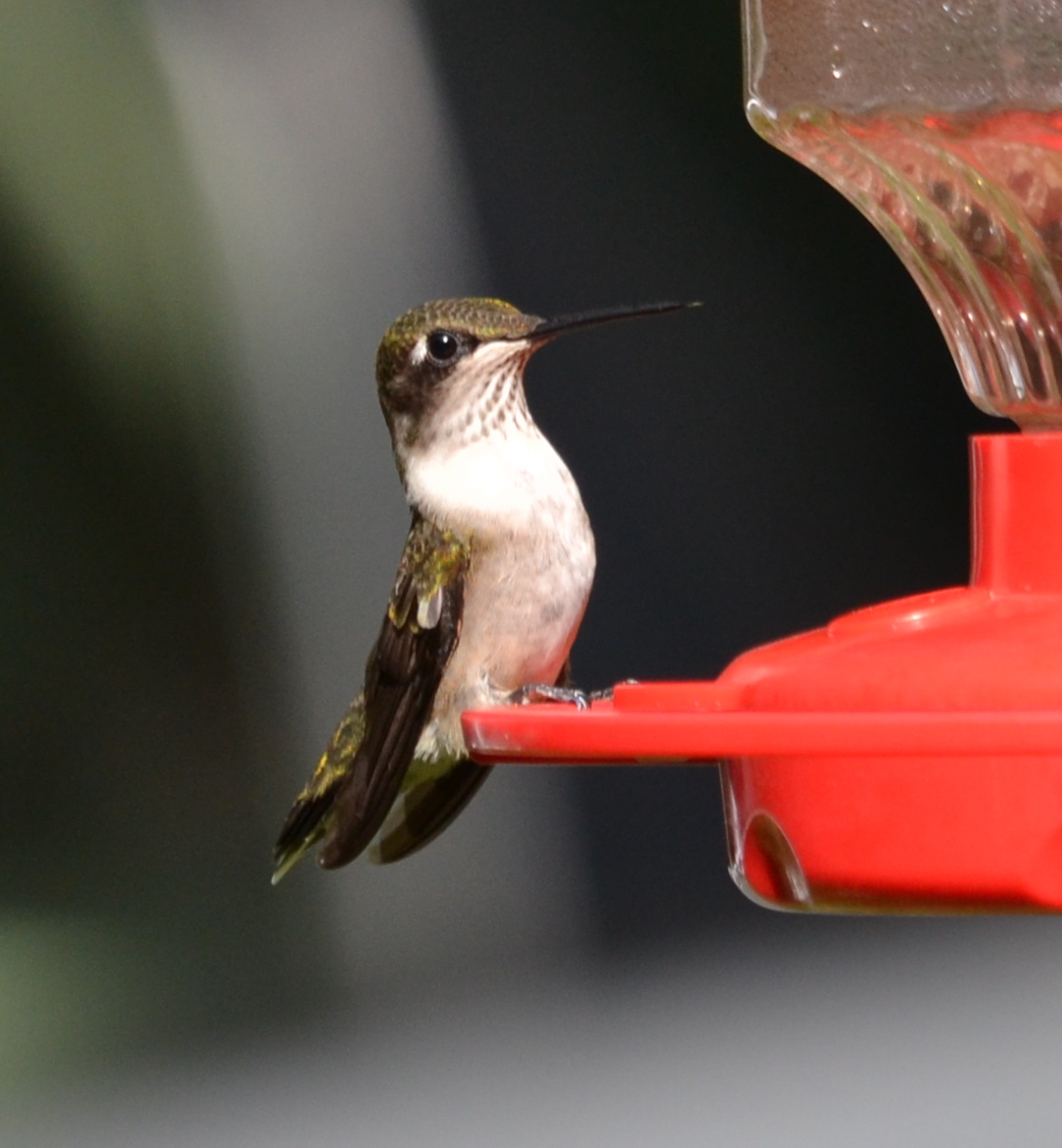
In retrospect, I need to move a few of
the feeders. Those sweet, adorable, itty-bitty birds are viciously
territorial, and they expend enormous energy chasing their
competition away from the feeders.
One feeder is almost empty. And my neck
is getting stiff.
Because although my desk is in the
corner, the window is to my left...
...I've been spying on hummingbirds all
morning.
Stephen King would not be amused.
(Unless I wrote a graphic account of the evil praying mantis capturing
and torturing an innocent hummingbird...)
Nope.

Cheers!
Julie


