Showing posts with label cool weather crops. Show all posts

Friday, August 30, 2013

Prepping and Planting the Fall Garden.


A few days ago, some of my friends and I were chatting about gardens. (Shocking, I know.) Specifically, I mentioned that I need to clean up the summer garden and prepare it for fall crops.
It's a painful process for me.

I hate tearing out any plant that's still producing, even if emotionally I'm so, so ready to get rid of the uglies and plant perky, happy seedlings. As vile as the vines look, I'm not ready to give up fresh tomatoes. I've pulled a lot of vines, but there are still a few that I'm pampering, hoping to enjoy bruschetta through the fall.
 

So, instead of ripping out all of the summer plants in August, I prepare for the fall garden by starting seedlings in the greenhouse. Yes, it's probably less time consuming to direct sow lettuce, but by planting seeds in biodegradable pots, I'm extending the summer garden as long as possible while getting a head start on growing produce.

If you're starting seedlings for your garden, you might want to refer to this chart that I put together last fall. It's my cheat sheet that shows when you should plant seeds for your fall garden, depending on your first expected frost date (which you can find here.) It also gives you hints about depth for planting, how long until germination, and when you can expect to harvest your crops. Some seeds, like radishes and carrots, really do need to be direct sowed, though. Still, that's OK—radishes grow quickly and are typically ready to harvest in 28 days. Carrots can remain in the garden throughout most of the winter (mulched with straw in cold climates), harvesting as you need them. In fact, the cooler soil can make the carrots taste sweeter.

Before any plants enter the fall garden, all of the summer debris needs to be cleared—particularly any diseased plant material. A fresh layer of compost will be added to the beds and mixed in well, and I'll do a soil test to check pH and determine any nutrients that are missing for the fall crops.


But the best part of planning the fall garden? Why, selecting what you're going to grow, of course! My friends asked what I planned to grow this fall, but at the time I hadn't selected the varieties. Now, though, the seeds have arrived and are anxiously awaiting their new home! Everything I've ordered is heirloom and organic, and some of the varieties are just ridiculously beautiful. Here's what's going in the fall garden:


Heirloom lettuce
Forellenschluss (My favorite—I love its beautiful speckling, plus it's crispy and delicious.)
Grandpa Admire's (Another favorite that's on Slow Food USA's Ark of Taste.)
Merveille des Quatre Saisons (I just love saying the name in my high school French accent.)
Big Boston
Flame
May Queen
Petite Rouge
Red Romaine
Rouge d'Hiver
Rubin
Chadwick's Rodan

Spinach
Merlo Nero
Bloomsdale Long Standing
Red Malabar (which isn't spinach, really...but it's a beautiful vining green with red stems, so I'm excited to add it to the garden.)

Chinese Greens
Ching Chang Bok Choy
Chinese Pak Choy
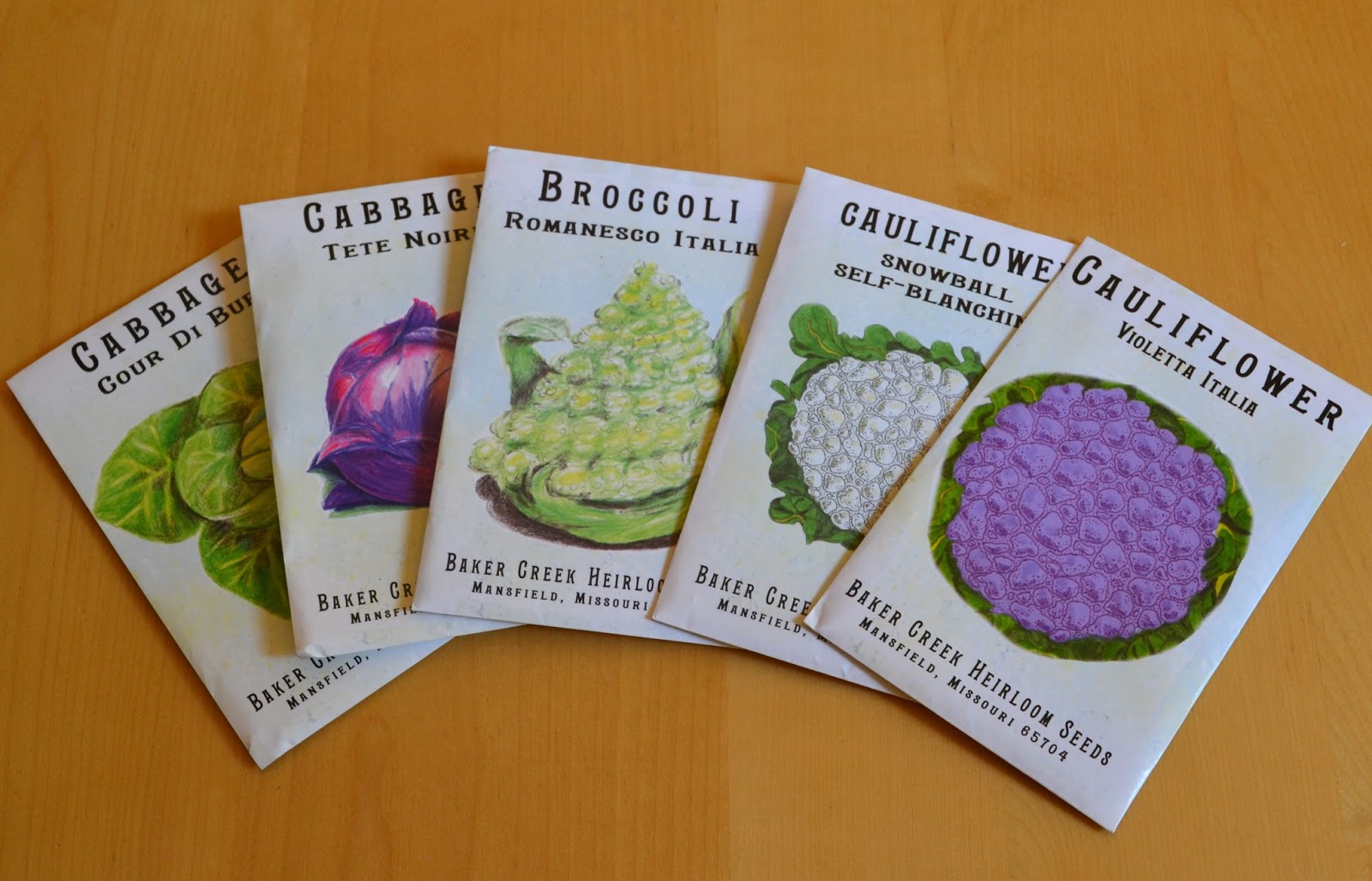

Broccoli
Romanesco Italia

Cauliflower
Violetta Italia
Snowball Self-Blanching

Cabbage
Cour di Bue
Tete Noire

Swiss Chard
Five Color Silverbeet

Kale
Lacinato
Red Russian
Chinese White Flowered


Peas
Blue Podded Blauwschokkers
Golden Sweet Snow
Sugar Ann Snap

Radishes
Early Scarlet Globe
French Breakfast
Purple Plum
Pink Beauty

Beets (I'm embarrassed to say—I've never grown beets. Can't wait to try these!)
Chioggia
Gourmet Blend

Leeks
Bleu de Solaise
Scotland

Carrots
Parisienne
St. Valery
Amarillo
Cosmic Purple

I'll also grow some Brussels sprouts for Peter, but I'll most likely buy transplants for those. For whatever reason, I have a tough time getting them started from seed, and I have a source locally where I can get organic Brussels sprouts plants.

Oddly absent from our southern garden—collards. I know, I know—how can I be a southern gardener without collards? For whatever reason, we just don't eat collards. Maybe it's my Yankee upbringing coming out. Can anyone give me a good endorsement for collards and why I should try them?

I haven't ordered my garlic and shallots yet—and I need to do that soon. Many varieties of garlic sell out early, so that's definitely on my to-do list. Usually, I dedicate one raised bed to garlic and plant about five varieties. We use a lot of garlic!

Besides planting the beds in the large kitchen garden, I'm starting seedlings for the potager, as well as for some containers. I'm also planning to incorporate some fall edibles into the front gardens. Personally, I've never liked ornamental cabbages, but I find edible combinations, like kale and violas, or the rainbow colors of Swiss chard alone, really beautiful. We'll see how it turns out! I'll keep you posted.

I also need to check my mini hoops from last year to make certain the plastic isn't torn. In our zone 7b garden, these little low tunnels (which cost a whopping $10 for materials) provide enough protection from the cold to keep most of our crops producing throughout the winter. I also cover the potager with plastic when we have a freeze warning, but I already know I need to replace that plastic cover. The fencing gouged big holes in the plastic due to the weight of rain on the cover. (Note to self: remove the plastic before a rain!)
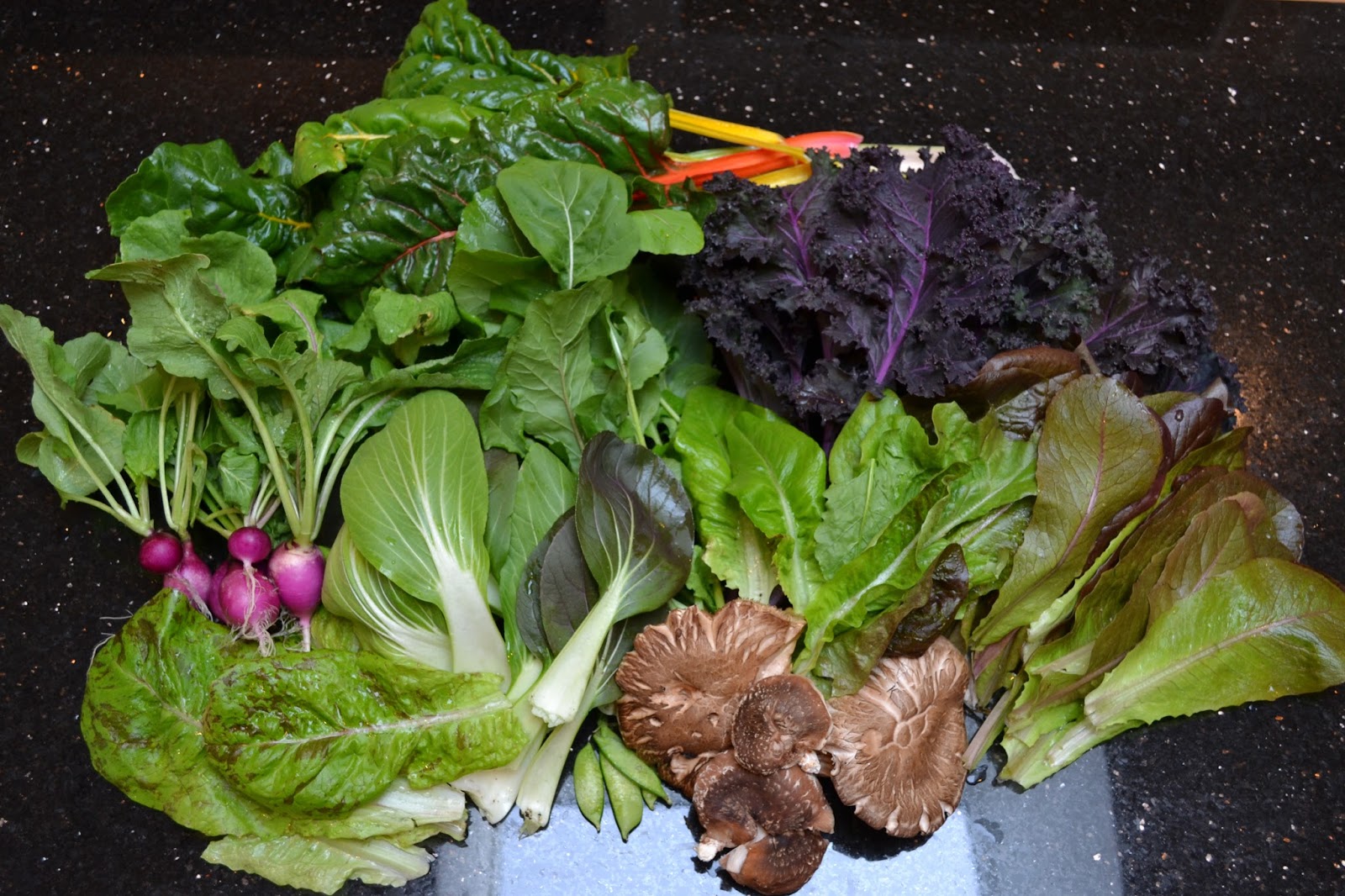

With a little preplanning and preparation, we'll be enjoying lovely harvests from the garden all winter. 

Have you planned your fall garden? What are you most looking forward to growing in the cool weather?

Hope you enjoy a wonderful holiday weekend!

XOXO ~

Julie

Tuesday, November 13, 2012

The (less than) $10, 5-minute Low Tunnel. Really!


Most of the time, I love living in South Carolina. Smiling Faces, Beautiful Places—it's a fairly apt slogan for our state. Of course, though, some of those smiling faces continue to fly the Confederate flag while circulating petitions to secede from the United States.

(News flash: that war is over, people.)


Still, while that kind of nonsense evokes my weekly rants and increased blood pressure, South Carolina's benefits outweigh the negatives. In less than an hour, we're in the mountains, hiking. In three hours, our toes squish in the sand of Isle of Palms. 

And of course, with our mild climate, I garden all winter...with a little effort.


Zone 7b, where we live, typically experiences the first frost around October 31. This year, we bought a little extra time, with our first frost making an appearance last week.

I was ready.

A little wire, a little plastic, some office supplies, and voila—instant low tunnels to protect the fall and winter crops.

Cost: less than $10. Time: 5 minutes.

Honestly, even the laziest of gardener (me) can't argue with the return on that investment. Eating heirloom lettuce, bok choy, kale, Swiss chard, cabbage and sweet peas from the garden all winter?

Yes, please.


Here's what you'll need to create your own mini tunnel:
  1. One heavy weight, clear, plastic drop cloth, found in the painting supply section of your hardware store. Our raised beds are 4' x 10', so I purchased the 9' x 12' drop cloth, 2 mil thickness. Cost: $2.98
  2. Two 10' masonry ladders. You'll find these in the concrete section of the big box stores. They may also be referred to as steel remesh, but the product you want actually looks like a small wire ladder. Ask the nice person at the store to cut the ladders in half so you'll have four, 5' ladders. Cost: $3.98
  3. One box of large binder clips, 12 count. Cost: $2.99
Directions:

Beginning at the front of the raised bed or garden row, insert one end of the wire ladder into the soil several inches. Support the ladder as you bend it over the top of the bed so that it forms an arch, and insert the opposite end into the soil.


Repeat at equal intervals, with the last ladder placed at the end of the bed/row. You should have 4 small arches spaced equally in the bed.


Remove plastic cover from bag and unfold. Spread plastic over the supporting ladders, covering entire bed/row.


Use binder clips to attach plastic to ladder supports at the bottom of each ladder, near the soil line, to ensure that the bed or row is completely covered and plastic is secured.

Ta da! You're done!


And now, a...

WARNING:
Watch the temperature! It's not unusual for a frost to be followed by a 70 degree day in our garden. Make sure to remove the cover if you expect a warm day with temperatures in the 50s or above. You don't want to cook your veggies until you WANT to cook your veggies. Preferably not under plastic.


The best part of the system is that it's so easy to uncover—just unclip one side of the plastic, fold it over to the ground on the opposite side of the bed, and secure it with the clips to the ladder to prevent it from blowing in the wind. When frost threatens, cover the garden.

I love easy.

Now, if only I could find an easy way to ensure that South Carolina doesn't secede from the United States...

I'll keep you posted.

Until then, enjoy your extended harvests!

XO ~

Julie

Tuesday, September 4, 2012

Cool Companions.


It's September. And I swear, South Carolina is hotter now than in July. Yesterday, as I sprinted from the car to the grocery store through a downpour, I thought, ”Well, at least it will be a little cooler when this nasty weather lets up.” Instead, as I exited Publix, I hit a wall of heat and humidity so dense that I could barely breathe.

Seriously. I gasped for breath while loading bags into the car. And my hair looked lovely from the rain and humidity.

Today isn't much better. Our windows sport rivulets of water, the clash between outside heat and inside AC.

Thank goodness for AC.

So, although it's hard to get excited about planting a fall garden in a sauna, I'm forging ahead. 


Seeds that I planted last week are sprouting, but I'm a bit concerned about the lettuce. While I placed the trays of seeds on a shady greenhouse shelf, I fear that the intense heat cooked the seeds. I've moved the trays out of the greenhouse and plan to watch them for a few days, because lettuce sprouts pretty quickly. Otherwise, it's back to the trays to reseed. All ten varieties.

Yeesh.

Whether your fall garden will include seeds you started using this guide, or if you decide to purchase transplants or direct seed, you need a plan.


How will you organize your garden? And how will you prevent pests from snacking on your crops?

Why, you'll embrace companion planting, of course.

Many people think of organic gardening as simply the avoidance of chemicals—or the use of OMRI approved chemicals—in the garden. However, companion planting is a main premise in organic gardening.

Companion planting involves growing different species of plants together to benefit one or both. Rather than planting a monoculture, mixed plantings attract beneficial insects, deter pests, and boost soil health to produce better harvests.

For instance, aromatic herbs like rosemary mask the scent of a crop from pests. Some plants, like mint, produce odors that deter or confuse pests. Other plants, like parsley, serve as a trap crop, drawing insects away from the main crop. Strategic companion planting can aid in pollination, with plants providing food to sustain beneficial insects. Companion plants can also create a habitat for predatory insects that feed on pests.

I often use companion planting in the spring and summer gardens, and probably one of the most widely-known pairings is basil grown with tomatoes. This summer, though, I tried a new companion planting: icicle radishes planted among squash to combat squash vine borers. After losing all of the squash plants last year, I was skeptical.

Guess what? I'm still harvesting squash.

Needless to say, I'm a believer in companion planting!

Based on the summer success, I'm planning our fall gardens to include companions. Cool weather crops can benefit from strategic, well-designed companion plantings, particularly as many of the cool crops belong to the same family: brassica.


And cabbage worms love brassica.


Cabbage worms are sneaky. And destructive. And very difficult to locate. Companion plantings help deter these nasty creatures. (But still, we need to be vigilant. Check the undersides of leaves and stems regularly.)

To save you a bit of time when planning your fall garden, I've compiled a list of cool weather crops and good companions to plant along with them:

-->
Crop Companion Notes
Beets Onions, kohlrabi, lettuce, cabbage, garlic, mint Garlic improves growth and flavor. Mint attracts beneficial insects.
Broccoli Aromatic plants, dill, celery, chamomile, sage, peppermint, rosemary, potatoes, beets, onion Aromatic plants deter cabbage aphids, cabbage worms, flea beetles. Celery, onions, and potatoes improve broccoli's flavor.
Brussels Sprouts Aromatic plants, celery, dill, chamomile, sage, mint, rosemary, hyssop, thyme, wormwood, onions, potatoes Aromatic plants deter cabbage worm, cabbage aphids, cabbage whitefly.
Cabbage Aromatic plants, celery, dill, chamomile, sage, mint, rosemary, hyssop, thyme, wormwood, onions, potatoes Aromatic plants deter cabbage worm. Sage repels cabbage flies, cabbage looper, cabbage maggot. Chamomile and dill improve growth and flavor of cabbage.
Carrots Chives, onions, leeks, parsley, aromatic plants, rosemary, wormwood, sage Parsley repels carrot fly. Wormwood planted around border repels animals. Chives improve growth and flavor.
Cauliflower Celery Deters white cabbage butterfly, cabbage worm.
Fruit trees Chives Plant around base of fruit trees to discourage insects from climbing trees.
Kale Cabbage, potatoes, aromatic plants Aromatic plants repel cabbage fly, cabbage worms
Kohlrabi Onions, leeks, aromatic plants Aromatic plants repel flea beetle, cabbage root fly, aphids
Leeks Celery, onions, carrots Celery improves growth and flavor. Leeks repel carrot fly.
Lettuce Onions, strawberries, carrots, radishes, aromatic plants Onions and aromatic herbs deter slugs.
Onions Cabbage, beets, strawberries, lettuce, chamomile Do not plant with peas or beans. Chamomile improves growth and flavor.
Peas Carrots, turnips, radishes, mint Do not plant with onions or garlic. Mint improves health and flavor.
Radishes Beets, spinach, kohlrabi, lettuce Lettuce makes radishes more tender.
Spinach Strawberries, peas Peas provide shade for spinach.
Swiss Chard Beans, cabbage, onions Aromatic plants repel beet leaf miner. Chard grown near companion helps keep moisture in soil.


Additionally, several aromatic herbs provide a wide variety of benefits as companion plants:

Chamomile: Improves the growth and flavor of cabbage, deters pests.
Chives: Improves growth and flavor of carrots, deters pests.
Garlic: Prevent borers of fruit trees.
Hyssop: Increases yield of grape vines, lures away cabbage butterfly. Bees are attracted to hyssop, but many pests are repelled by it.
Mint: Improves health and flavor of cabbage, deters white cabbage worm by repelling egg-laying butterflies. Spearmint repels ants and helps deter aphids. NOTE: Mint can be very invasive! Plant in a container to include in the garden.
Oregano: Repels cabbage butterfly.
Rosemary: Deters bean beetle, cabbage moth, carrot fly.
Sage: Repels cabbage flies, carrot flies, black flea beetle, cabbage looper, cabbage maggot.
Thyme: Deters cabbage worm, white fly.
Wormwood: Repels animals in the garden when used as a border. Repels moths, flea beetles, and cabbageworm butterfly.

So, now we're ready. With our companion planting table in hand, we can plan our best fall gardens.

And hopefully, we'll spend more time planning delicious dinners than culling cabbage worms.

Now, if only the weather would cooperate...

Happy gardening!

XO ~

Julie

Reposted to Farm Girl Friday Blog Fest.